Kansas Snapshots by Gloria Freeland - December 5, 2025
A matter of taste
Husband Art isn't a picky eater, so he has little difficulty finding something on a menu he likes when we go out to eat. In fact,
that's sometimes the problem ... everything looks good to him. When that happens, he does something I've never known anyone else
to do. By the reaction of the servers, it's apparently rare.
"Pick something for me," he'll say. The initial reaction is usually disbelief. But once the server realizes he's serious, Art will
get one of two responses. An insecure server will start questioning him, attempting to get his preferences. A more confident one
perks up and enjoys the challenge. Art's only requirement: no liver.
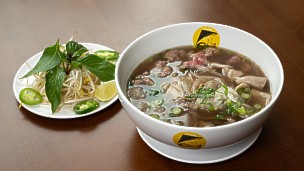
When daughter Mariya, her wife Miriam, and I decided on takeout a few weeks ago, Art said, "Order something for me." That was
familiar territory.
I tried it and thought it was acceptable, but Art's “liked” would have to be printed in all uppercase letters.
So the next time we ordered from the same restaurant, he wanted the same dish. And he again made leftovers from it just like
before - two times after the original.
After the most recent experience, however, he said, "As far as I'm concerned, tell them next time to leave the beef out!"
So why did the broth appeal so much? He did some online searching and had a "Eureka!" moment.
It also explains why for me, it was just acceptable. I find anise to be sickeningly sweet and a taste that lingers long after I've
swallowed it.
This difference made me wonder whether this is a genetic thing or something we learn.
A May 2017 article on epicurious.com answered some of my questions. In the article - "My Completely Justifiable Hatred for Black
Licorice" - food writer Adina Steiman said:
Like all qualities that I find intrinsic to my being, I can’t remember my first memory of hating all things black licorice,
fennel, and anise. All I know is that the lingering, cloying, sickly sweetness has always been my own personal definition of a
nightmare. I do recall also being genuinely baffled by the appeal of diet soda from an early age. And no wonder. Some theorize
that glycyrrhiza glabra (an evil villain name if I ever saw one), the compound that gives fennel, black licorice, and anise their
characteristically horrifying taste, is chemically similar to that of artificial sweeteners.
Hmmm, so that's why I don't like diet sodas either! While Art says he can't tell much difference between diet and regular pop,
once I taste them, he can tell immediately which one is the diet by my look of disgust.
Although Mariya loves the Vietnamese soup, she removes the cilantro that is sprinkled on top as it tastes like soap to her.
According to dietitian Monica Auslander Moreno, disliking cilantro is genetic. In a May 2019 article in Women's Health, she said,
"... while cilantro's tanginess might taste pleasant to you, for some, a chemical in cilantro takes their taste buds for a wild,
unpleasant ride."
Many who hate cilantro describe that soapy taste, but some, including famous chef Julia Child, describe it as having "kind of a
dead taste."
Art too has that same "tastes-like-nothing" reaction to cilantro, while I love it.
Studying why some people like certain flavors and others don't is serious science.
Dr. James N. Palmer, University of Pennsylvania's School of Medicine, said, scientifically, taste covers salt, sweet, sour, bitter
and umami (savory), which are chemical cues picked up by the tongue. "Flavor is the combination of taste and smell. So what people
will call taste isn't really taste: It's flavor."
He explained we break down our food with our teeth and the enzymes in our saliva. Those bits go over our papillae - the thousands
of bumps on our tongue, roof of our mouth and throat. Those papillae contain taste buds, each of which has between 50 to 100
chemical receptors that identify the five tastes. The chewing process releases odorants that travel into the back part of the nose,
which is how we process odors while consuming food. Our brains also pick up on texture - crispiness, stringiness, sliminess,
roughness, and others.
Genes do affect the number of which papillae and odorant cells we get. But over time, our brains can overrule those basic sensory
inputs, so we sometimes grow to enjoy items we once disliked.
Art's liver thing? He may have the gene that makes him overly sensitive to metals. He can't stand well water with iron or sucking
on a bleeding cut. I guess a job as a vampire is out of the question.
Well, so I don’t like black licorice, but I love fried chicken and mashed potatoes. That could be my genes talking. I hated
Brussels sprouts when I was a kid, but I eventually learned to love those bitter green balls. Sounds like my brain weighing in!
I can't stand slimy oysters, but I think crispy fries are to die for. Don't know!
So is this a matter of taste - or flavor?